Reviewing There’s a Great Big Beautiful Tomorrow
As an embroidery designer who has spent countless hours digitizing and stitching out files for clients, I have learned that not every graphic translates well to thread. Some designs look stunning on a screen but become a tangled mess under the needle. Recently, I evaluated There s a Great Big Beautiful Tomorrow to determine its viability for real-world projects. This piece falls under the broad categories of Crafts and Graphics, but my focus was strictly on its performance as a machine embroidery design. My goal was to see if it could hold up in a professional setting, from custom apparel to boutique home goods.
First Impressions and Visual Personality
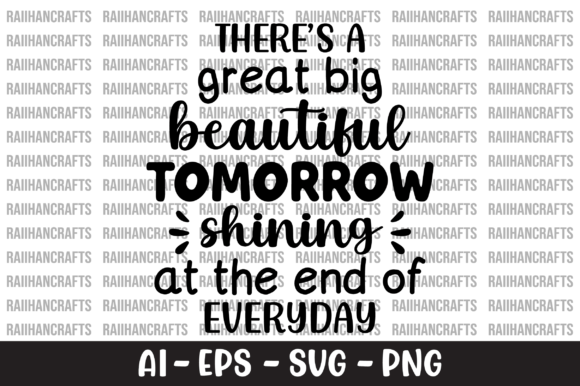
The first thing that struck me about There s a Great Big Beautiful Tomorrow is its optimistic tone. The phrase itself carries a nostalgic yet forward-looking weight, likely appealing to fans of mid-century modern aesthetics or retro-futurism. Visually, the layout appears balanced, with a flow that suggests movement. For an embroidery project, this is crucial. Static text can feel stiff, but a design with inherent rhythm allows for more creative stitch choices.
The mood created is one of warmth and encouragement. This makes it an ideal candidate for personalized gifts where the emotional connection matters as much as the visual appeal. Whether it is for a friend who supports your special day or a customer looking for motivation, the design communicates pride and creativity. However, as a reviewer, I look past the sentiment to the technical execution. Does the typography have enough spacing to prevent thread bunching? Are the curves smooth enough for a satin stitch, or will they require a complex fill stitch approach? These are the questions that determine if a design is merely decorative or truly functional.
Real-World Application: The Tote Bag Test
To test the practicality of There s a Great Big Beautiful Tomorrow, I imagined a common scenario for small business owners and Etsy sellers: creating a high-quality tote bag design. Tote bags are staple items for craft fairs and online shops, but they present specific challenges. The fabric is often canvas or heavy cotton, which has a distinct texture.
In this scenario, the design needs to be bold enough to stand out against the weave of the fabric. If the lettering is too thin, it gets lost. If the stitch density is too low, the fabric shows through, making the product look cheap. I found that this design works well here because its structural integrity allows for robust stitching. When applied to a tote bag, it serves as both a functional accessory and a statement piece. The "beautiful tomorrow" message resonates with eco-conscious buyers who appreciate handmade products that promote positivity.
Beyond tote bags, consider sweatshirt embroidery. A crewneck sweatshirt provides a large, stable canvas. Here, the design can be scaled up slightly to fill the chest area or placed prominently on the back. The comfort of the garment pairs well with the uplifting message, making it a strong seller for casual wear. For baby embroidery, such as on a onesie or blanket, the design offers a gentle hopefulness that parents appreciate. However, scaling it down for smaller items requires careful attention to detail to ensure legibility.
Navigating Technical Challenges
While There s a Great Big Beautiful Tomorrow is versatile, it is not without its limitations. Experienced designers know that certain fabrics and hoops demand caution. For instance, using this design on stretchy fabric like jersey knit requires a proper stabilizer. Without it, the stitches may pucker, distorting the text and ruining the aesthetic. Similarly, textured fabrics like terry cloth or fleece can obscure fine details. If the design includes intricate corners or tiny lettering, these might get swallowed by the pile of the fabric.
Curved surfaces, such as caps and hats, present another hurdle. Embroidering on a cap requires precise hooping and often a different digitizing approach than flat garments. If There s a Great Big Beautiful Tomorrow has wide horizontal elements, it might not conform well to the curved panel of a baseball cap without distortion. In such cases, I recommend testing a smaller version or adjusting the placement to the side panel rather than the front center. Dark fabrics also pose a challenge if the thread colors do not offer sufficient contrast. A dark navy shirt needs bright, contrasting threads to make the design pop; otherwise, the effort goes unnoticed.
Enhancing Product Value and Brand Consistency
For commercial embroidery and small shop products, the perceived value of the finished product is paramount. A well-executed embroidery job signals quality and care. When There s a Great Big Beautiful Tomorrow is stitched cleanly, with consistent tension and no loose threads, it elevates the item from a simple commodity to a cherished keepsake. This boosts customer trust and encourages repeat business for Etsy sellers and boutique owners.
Brand consistency is another key factor. If your brand focuses on uplifting, retro-inspired, or motivational items, this design fits seamlessly into your lineup. It complements other design assets that share a similar vintage or optimistic vibe. Using it in printable mockups for your online store can help customers visualize the final product, increasing buyer engagement. The design’s versatility allows it to be used across various media, from embroidered patches to kitchen towels, maintaining a cohesive brand identity.
Practical Notes for Designers and Makers
Before committing to a large production run or listing There s a Great Big Beautiful Tomorrow in your shop, follow these practical steps:
- Test on Scrap Fabric: Always stitch out the design on the same type of fabric you intend to use for the final product. This reveals issues with tension, density, and stabilizer choice.
- Check Thread Color Contrast: View your design in black and white mockups to ensure the shapes remain distinct without color reliance. This helps in selecting thread colors that provide clear definition.
- Review Stitch Density: High density can make garments stiff and uncomfortable, while low density may look sparse. Adjust settings based on the fabric weight.
- Confirm Hoop Size: Ensure the design fits within your machine’s hoop capabilities. If it is close to the limit, consider resizing or splitting the design if possible.
- Inspect Small Details: Zoom in on the digital embroidery file to check for potential jump stitches or tight turns that might cause thread breaks.
- Verify Licensing: Since this is a graphic intended for various purposes, confirm the license terms. Can you sell finished items? Is it for personal use only? Clear licensing prevents legal issues for craft businesses.
Additionally, consider the washability of the final product. Items like aprons and tea towels undergo frequent washing. Ensure that the thread quality and stabilizer used can withstand repeated laundering without fraying or shrinking excessively. For holiday embroidery or wedding gifts, where the item might be kept as a memento rather than used daily, these concerns are less critical, but durability still reflects professionalism.
Final Verdict
There s a Great Big Beautiful Tomorrow is a compelling addition to any designer’s library. Its strength lies in its emotional resonance and adaptable layout. While it requires thoughtful application regarding fabric choice and stabilization, it rewards the maker with a polished, professional result. For those in the crafts and graphics sector, particularly those selling handmade products or custom apparel, this design offers a reliable way to connect with customers on a personal level. By respecting the technical constraints and leveraging its visual strengths, you can create standout pieces that truly show your pride in your creative work.