Reviewing the Hoppy Easter Quote SVG for Real Embroidery
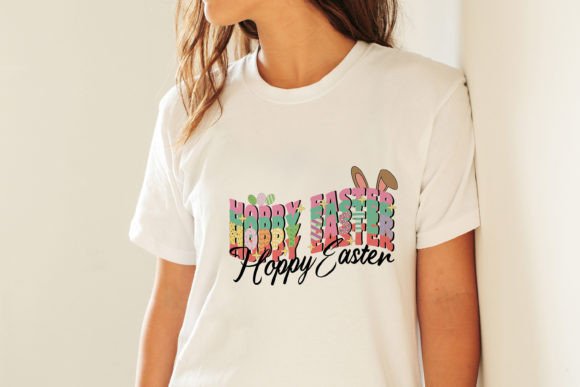
As a designer who spends more time staring at stitch simulations than I care to admit, I have learned that not every cute graphic translates well to thread. When I first pulled up the Hoppy Easter Easter Quote SVG Design, my initial reaction was one of cautious optimism. The concept is playful, leaning into the punny side of holiday decor, which always sells well in the spring season. However, my job is to look past the screen and imagine how this design behaves under the needle. Does it hold up on a textured tote bag? Will the lettering remain legible on a baby onesie? This review breaks down the practical realities of using this asset in your next embroidery project.
First Impressions and Visual Personality
The mood of this design is undeniably cheerful. It captures that specific blend of whimsy and warmth that defines successful holiday embroidery. Visually, the layout appears balanced, combining illustrative elements with typography. For an experienced eye, the immediate question is always about complexity. Is it too dense? Too sparse? From what I can see in the preview, the design avoids excessive clutter, which is a good sign for home embroiderers who might not have industrial-grade machines.
The theme fits squarely into the Crafts category, appealing to those who value handmade charm over sleek, corporate minimalism. As a piece of Graphics art, it relies on clear lines and recognizable shapes. This is crucial because embroidery cannot replicate the infinite gradient of a digital print. The success of this design depends on how well those shapes convert into satin stitch borders and fill stitch areas. If the original vector paths are clean, the resulting embroidery file should produce crisp edges without unnecessary jump stitches or thread breaks.
Real-World Application: The Tote Bag Test
To truly evaluate the Hoppy Easter Easter Quote SVG Design, I imagined applying it to a classic spring product: a canvas tote bag. This is a staple for any Etsy seller or small shop product line during the Easter rush. Canvas is a forgiving fabric, but it has a distinct weave that can swallow thin lines.
In this scenario, the design’s statement nature works in its favor. Larger text and bold icons tend to read better on coarse fabrics like canvas or linen. If you are creating a handmade product for a local craft fair, this design could serve as the centerpiece of a seasonal collection. The key here is scale. You would need to ensure the design is sized appropriately for a standard hoop, likely a 5x7 or 6x10 inch frame, to maintain impact without overwhelming the bag’s structure. A personalized gift like this benefits from high contrast, so pairing bright thread colors against a natural or dark canvas would make the quote pop.
Apparel and Soft Goods Considerations
Moving beyond bags, let’s consider custom apparel. Imagine this design on a pastel sweatshirt or a child’s tee. Here, the stakes are higher. Fabric stretch and texture play a massive role. If the design includes fine details or tiny lettering, these can easily distort on stretchy knits. For a baby embroidery project, softness is paramount. You would need to pay close attention to the stitch density. A design that looks great on screen might feel stiff and scratchy on a infant’s skin if the fill areas are too heavy.
For sweatshirt embroidery, the pile of the fabric can hide small details. I recommend testing the design on a scrap piece of similar material first. If the text becomes illegible, you may need to simplify the design or increase its size. This is where having access to multiple file formats, such as the included SVG and EPS, allows you to tweak the size before converting it into a machine-readable embroidery file. Always remember that what works for a rigid patch might fail on a soft fleece.
Technical Challenges and Fabric Choices
Not every surface is ideal for this type of design. While the Hoppy Easter Easter Quote SVG Design is versatile, there are constraints. Curved surfaces, such as caps or hats, require careful placement. If the design is too wide, it will wrap around the curve and distort the perspective. In such cases, a narrower version or an applique design approach might be better, though this specific asset appears to be a standard stitched design.
Dark fabrics present another challenge. If you plan to stitch this on navy or black fabric, you must ensure your thread colors have enough saturation. Light pastels might get lost against a dark background unless you use an underlay stitch effectively. Additionally, thin fabrics like silk or lightweight rayon require a robust stabilizer strategy. Without proper hooping and stabilization, the tension from the stitching can pucker the fabric, ruining the clean lines of the quote.
Be cautious with detailed corners. Sharp angles in vector graphics often result in thread buildup or needle deflection in embroidery. If the design features sharp serifs or intricate bunny ears, check the digitizing quality. Poorly digitized corners can lead to frequent thread breaks, slowing down your production time and frustrating your workflow. This is particularly important for commercial embroidery where efficiency equals profit.
Enhancing Product Value and Brand Consistency
Using a well-chosen design like this can significantly boost the perceived value of your finished product. Customers associate clean, professional embroidery with quality. When the stitching is even and the design is centered, it builds trust. For creative entrepreneurs, consistency is key. If this design aligns with your brand’s aesthetic—playful, family-oriented, and festive—it strengthens your brand identity.
Moreover, this design serves as excellent content for printable mockup creations. Even if you are selling the digital embroidery file itself, showing it stitched out on real products helps buyers visualize the potential. High-quality photos of the design on a tote bag design or a pillow cover can drive engagement on social media and improve conversion rates on your online store. It transforms a simple digital asset into a tangible desire.
Practical Notes for the Designer
Before you commit to stitching this on a final garment, take a moment to review the technical specifics. The product description mentions you will receive SVG, PNG, DXF, and EPS files. Note that these are graphic formats, not native machine embroidery formats like PES or DST. You will need embroidery software to convert these vectors into stitches. This step is critical. Auto-digitizing can sometimes produce poor results, so manual adjustment of stitch types—switching between running stitch for outlines and fill for larger areas—may be necessary.
- Test on Scrap Fabric: Always run a test stitch-out on the same fabric type you intend to use for the final product.
- Check Licensing: Confirm whether the license allows for commercial use if you plan to sell items made with this design. The description implies it is for a design store, but always verify terms.
- Contrast Check: View the design in black and white to ensure the shapes are distinct and readable without color reliance.
- Hoop Size: Measure your design dimensions against your machine’s maximum hoop size to avoid resizing issues.
- Stabilizer Selection: Choose a cut-away stabilizer for stretchy fabrics and tear-away for stable woven fabrics to support the stitch density.
In conclusion, the Hoppy Easter Easter Quote SVG Design offers a solid foundation for spring-themed projects. It requires thoughtful execution regarding fabric choice and digitizing, but with proper technique, it can elevate your craft business offerings. Whether you are making a personalized gift for family or stocking your small shop with seasonal goods, this design holds promise for those willing to pay attention to the details.